Love Without End
All films are emotionally manipulative or at least try to be. A film that wants its audience to feel nothing is waste of celluloid. But few films exploit emotions as blatantly as Love Without End, which runs its audience through a ringer of romance and tragedy – with an emphasis on the tragedy. In no particular order the characters are afflicted with: blood cancer, stroke, bankruptcy, alcoholism, prostitution and airplane crashes. Every time someone picks up a phone news of the latest disaster spills from the receiver.
Love Without End is, unmistakably, a ‘weepie’. Marlee MacLeod, a friend and writer defines weepies as
the classic weepie generally involves some worst-case scenario -- disease, unrequited love, family secrets, war and mental illness are the biggies
In only two hours, Love Without End manages to cover most of those disasters. It’s a weepie overachiever.
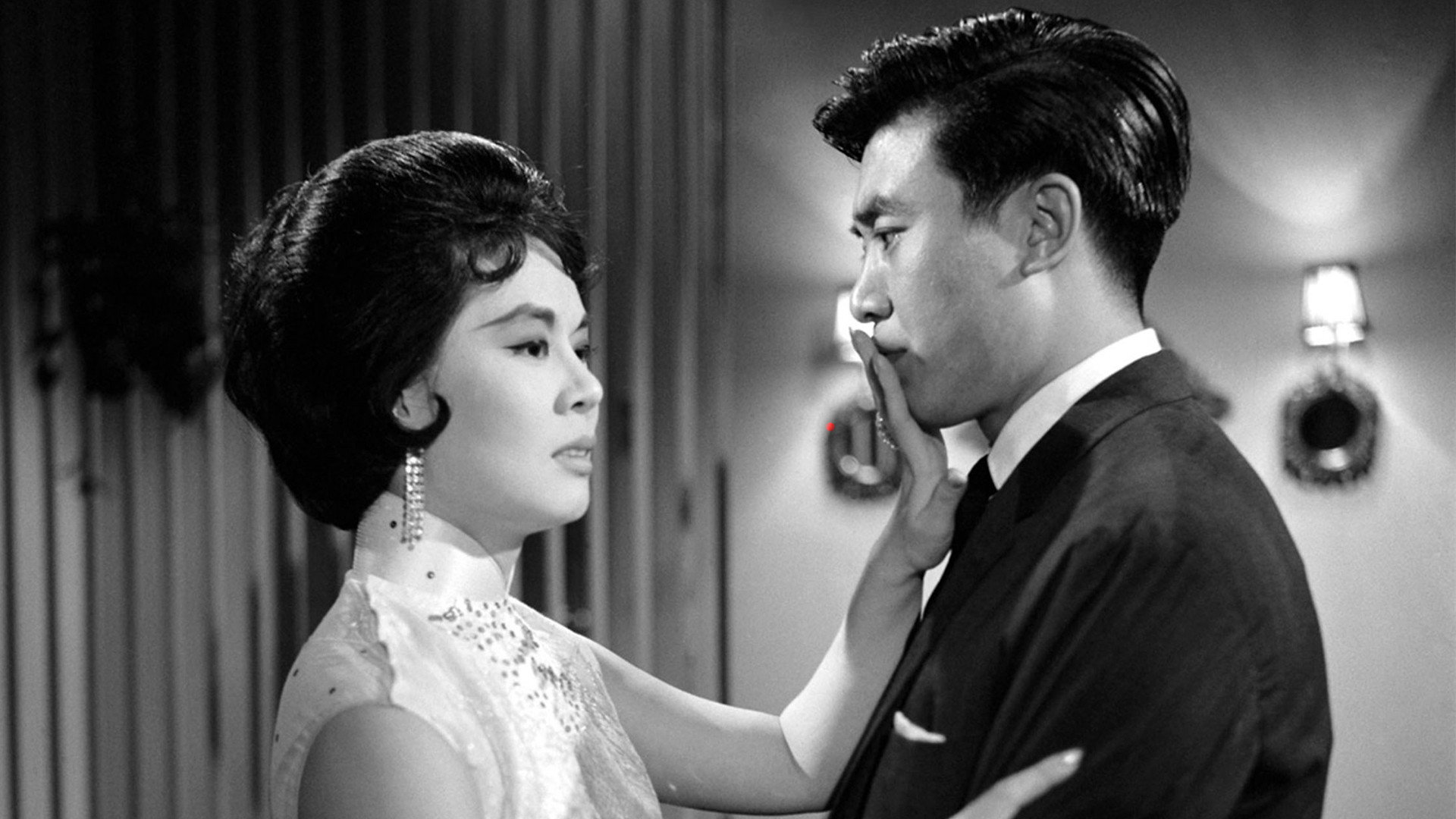
Linda Lin Dai won her fourth Best Actress award for playing the country girl Li Qingqing who, after a drunken Pengang (Kwan Shan) pushes her on a night club stage, becomes a popular chanteuse and Pengang’s girlfriend. (Note: I am likely spelling Pengang’s name wrong. It’s an indication of his lowly status that no movie reference site lists his name. The movie belongs to Linda Lin Dai.)
Then tragedy strikes. Repeatedly, frequently and brutally.
Why would anyone want to watch 2 hours of carefully orchestrated unhappiness? MacLeod suggests that weepies, by proxy, fulfill our desires for unhappiness, “We want to weep, to sacrifice, to have things fall apart without the inconvenience and unpleasantness of those things actually happening. We want contained suffering and we get it from weepies.”
Her “We” may be overly broad since I almost always find weepies to be annoying. The characters lurch about dragged by the strings held by the script never once saying the simple words that would end their tragedy, “I love you.” The weepies I’ve seen are erected on an elaborate house of cards that would crumble should the characters ever behave rationally.
Of course by asking for realistic behavior from weepie characters I’m revealing that I simply don’t get it. I am in the minority. Love Without End was a huge success in 1961 and was remade by Shaw in 1970. Its beautiful theme song remains a karaoke favorite.
While in widescreen Shaw Scope, the film is in black and white, an oddity for 1961. After 1958’s Diau Charn, Shaw released nearly all of their films in color. But, considering the film’s throwback appeal to the golden age of the weepies, black and white is a good aesthetic choice.
Included on the disc are three bonus interviews with young Hong Kong artists reminiscing about Linda Lin Dai and the impact of Love Without End. On other Shaw Brothers DVDs these interviews have not been interesting; this disc is an exception. Theatrical director Edward Lam brilliantly discusses the career of Linda Lin Dai, the problems she faced as an aging (i.e., over 27) actress and her skills in both comedy and drama. Lam prefers her comedic work and I agree. As the “Queen of the Asian screen” (as Shaw Brothers billed her), her ebullient personality, sharp wit and intelligent eyes worked better in strong-willed comedic roles than put-upon weepie heroines.
Ian Whitney
Published: 2004-03-21