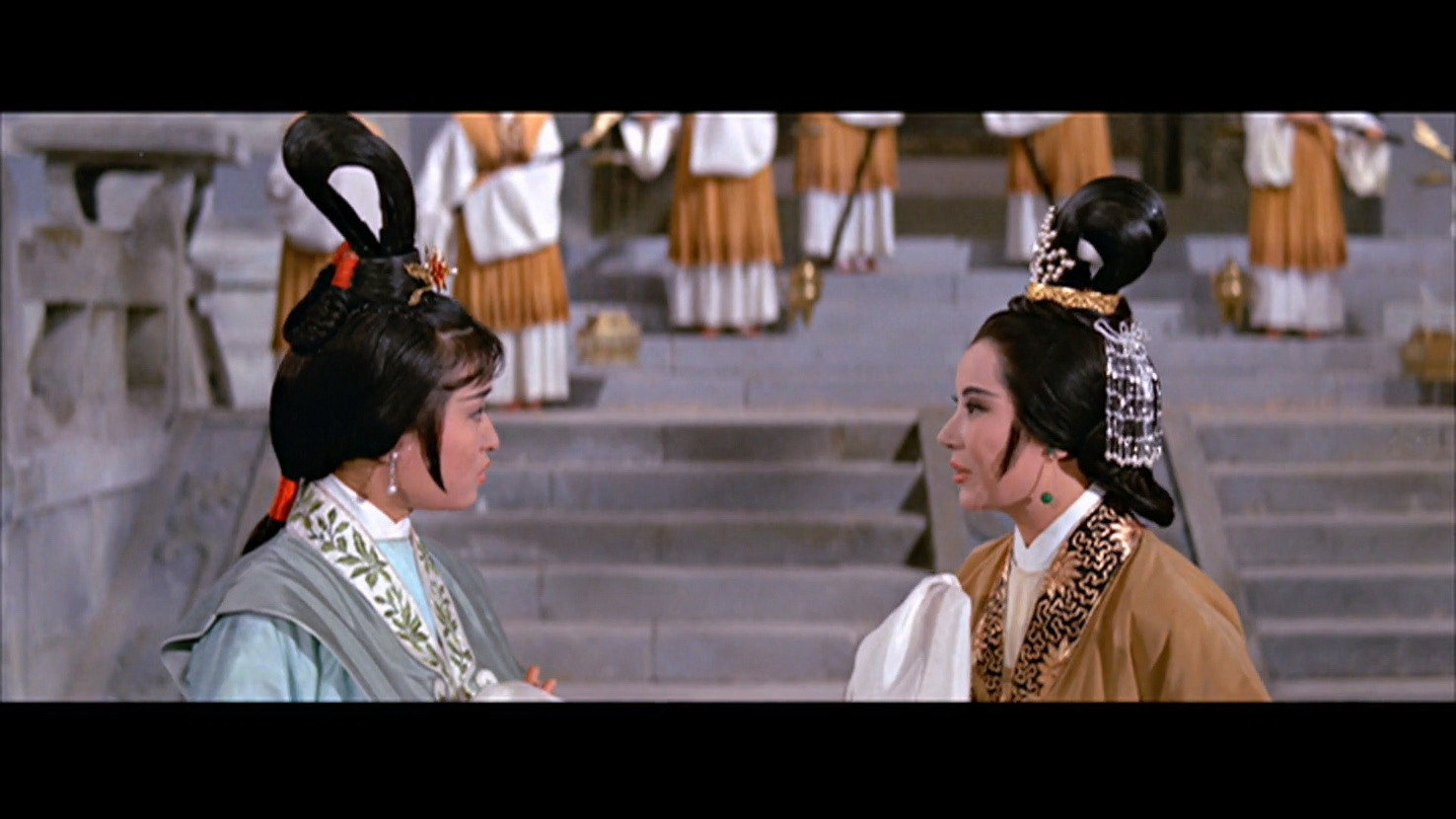
The Grand Substitution
Revenge. Sacrifice. Imperial intrigue. Corrupt government officials. These are the vital ingredients — not just of Shaw Brothers, but of Hong Kong film. But as the tastes of Hong Kong audiences have changed these ingredients have been mixed in different ways. Take, for example, The Kingdom And The Beauty in which the emperor wasn’t corrupt as much as he was extremely childish; it took the sacrifice of a good woman to teach him a lesson. Compare this to the Fong Sai Yuk films of the early 1990s in which government officials were pure evil; only righteous ass-kickings could restore the people’s rights.
In the mid-1960s tastes were shifting in Hong Kong and other Shaw markets. Stories of female sacrifice were still popular, but more violent, and male, forms of revenge were gaining ground. The Grand Substitution, although a Yellow Plum opera like Kingdom and The Beauty or Love Eterne, illustrates this shift with its mix of classic ingredients, maternal love and male revenge.
Two officials, the extremely pure Chiu and the absurdly evil Tu are vying for the control of China’s destiny under the profoundly stupid Emperor. Tu, with his exaggerated shoulders, giant eyebrows, shifty eyes and duck-pimp walk makes even the most melodramatic of villains look multi-faceted. Only an unprovoked puppy-kicking could have audiences hate him more.
Chiu, who believes in China’s beauty and potential, struggles against Tu’s attempts to oppress the masses. When Tu retaliates, wiping out most of the Chiu family, the only hope for survival — and revenge — lay with an infant, the last of the Chiu clan. Tu, like the biblical pharaoh, tries to hunt the child down. The heir is saved thanks to the painful, selfless sacrifices of Chinese revolutionaries who, judging by Hong Kong films, existed under every dynasty.
Much of this sounds like any number of later Shaw films, or even the historical kung fu films popular in the 1990s. But The Grand Substitution is very much of the 1960s and exemplifies the transition Shaw Brothers was undergoing at the time. Notable because it does not star a woman (although Ivy Ling Po does play a man, again), The Grand Substitution is remarkably male, a significant change from the female-oriented films Shaw made in the late 50s and early 60s.
But even with the emergent themes of male filial piety, a concern that would quickly come to dominate Shaw Brothers, the film saves its biggest scenes for the mother — their maternal sacrifices drive the film’s emotional impact. By contrasting theatrical scenes of beautiful opera and cinematic scenes of gore and torture The Grand Substitution straddles the line between the Shaw that was and the Shaw that would be.
Ian Whitney
Published: 2004-04-11