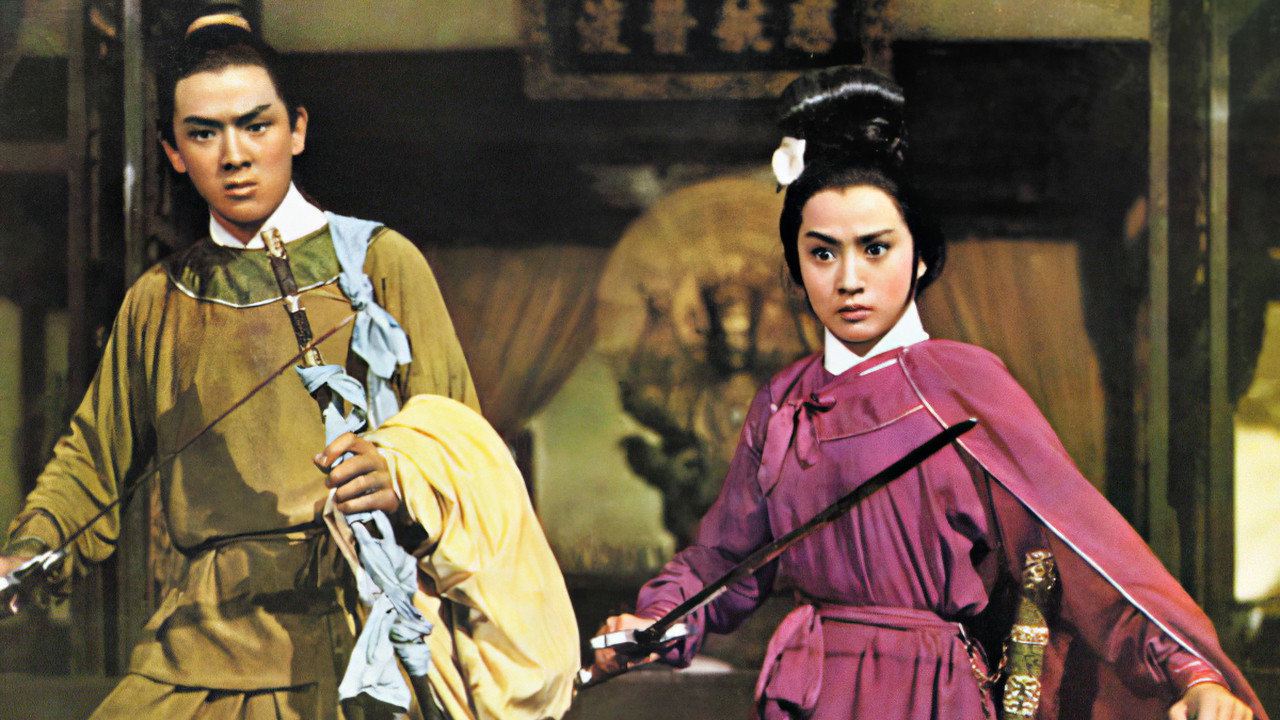
Temple of the Red Lotus
The pieces were there, someone just needed to pick them up. Swordfights, revenge, mystical kung fu power; these were woven into the cultural fabric of Hong Kong through adventure novels, classical myth, song and theater. Wuxia pian, or stories of chivalrous swordplay, was a popular genre even in the earliest days of Hong Kong film production.
But, as tastes waxed and waned, the wuxia pian film had fallen out of favor. Shaw built their Hong Kong studio not with wuxia, but with romance. And as long as romance continued to fill seats there was no reason to shake things up.
In the early 60s, this began to change. And, as I’ve noted in my reviews of the films before Temple, there was a growing presence of male violence and revenge. I’m not sure of the reasons; perhaps audiences were growing bored with romance. Perhaps imports of the classic samurai films of the early 60s sparked an interest in tales of bloody revenge. Maybe both. Regardless, in 1965 director Chui Chang Wang picked up the neglected pieces of the wuxia genre and fed them through the machine of Shaw style.
Appropriate that this was one of the first ‘new’ wuxia films. The story had been made before in “The Burning Of The Red Lotus Temple” (1956 and 1963 [Both were Cantonese productions, I believe]). And it was also made in 1928, when it was the first film to feature the special effects that would define the genre.
The results, at best, are rough. The opening battle, filmed at about 15 frames per second, compared to the normal 24, propels the actors like they were pumped full of crank. The plot careens from north to south, introducing new characters minutes before the finale and ending in the middle of the story. (Two sequels, The Twin Swords and The Sword and the Lute, probably tied up these loose ends). But the film was popular enough to lead to other wuxia films, like Come Drink With Me, that would start to smooth the jagged edges.
Rough or not, the pieces are there: the young man (Wang Yu in his first released film) looking to avenge his family; a new, powerful sword fighting technique; inter-clan battles; political machinations and mystery evolve here as Wu tries to figure out who is the villain: the Li family that he’s just married into or the mysterious Red Temple Clan.
But mixed amongst these rediscovered pieces of wuxia are elements that had been Shaw stalwarts for almost 10 years, issues of motherhood and a woman’s filial and marital obligations. Most of the battles are not won or lost through fighting skill, but through family bonds and love. Temple Of The Red Lotus is an evolution, not a quantum leap, and any new pieces had to spring from what had come before.
Ian Whitney
Published: 2004-04-19